
Vern Braswell, is serving 24 years for second degree murder at Northwest Correctional Complex in Tiptonville, TN.
In July 2020, he received an envelope in the mail. The sender’s name was given as Linda Fairstein, the prosecutor of the Central Park Five in New York, and the return address was a parking lot across the street from 201 Poplar, the Shelby County courthouse and jail.
Inside the envelope was an anonymous cover letter and nine letters from Mr. Braswell’s original case.
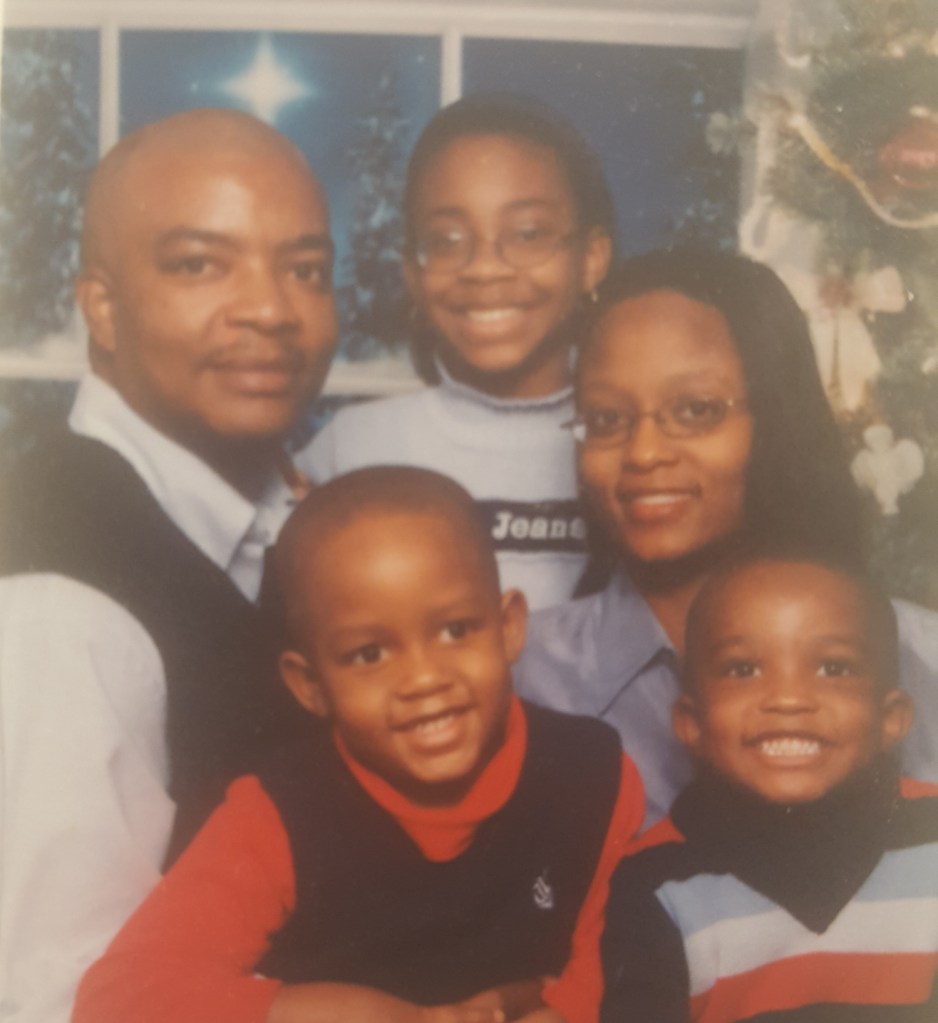
The prosecutor in Mr.Braswell’s case was Amy Weirich, the current Shelby Co. District Attorney, who is up for election this year. There is new evidence of material, in a sealed envelope with a sticky note initialed by Weirich saying that the contents should not be revealed to the defense. Some of the contents of this envelope turned up in 2020.

The Anonymous Letter


Download the letter (PDF). The writer is evidently an insider in the District Attorney’s office, who had been overcome with guilt during the George Floyd protests. The nine documents were originals or photocopies of letters of reference sent to the judge as character references in May 2005 for Vern Braswell’s bail hearing. These would have been useful during Mr Braswell’s sentencing and appeals, but were missing at that time.
The anonymous letter writer alluded to additional evidence which also went missing, related to details of Vern and Sheila Braswell’s sexual practices. It became clear to the police that the Braswells regularly engaged in choking during sex, which, if it has been known during the trial, would have shown that second-degree intentional murder was an overcharge for what was, in all probability, the result of an accident during sex play.
The letter writer said the evidence has been kept in a sealed envelope and hidden from the defense.
There was also a reference to the fate of his attorney for the post conviction reviews and appeals, Taylor Eskridge. Incarcerated people are generally indigent, and are assigned attorneys by the judge. Small time attorneys can become financially dependent on this revenue stream, so, if judges block them, they can, like Taylor Eskridge, lose their livelihood.
Nine Character References

The nine character reference letters were written in or around May 2005 in support of Vern Braswell’s bail application.
All nine letters start with how the writer knows Vern Braswell, continue with a description of some of Mr. Braswell’s good works, which are very good indeed, and conclude with an opinion that Mr Braswell would attend all hearings if granted bail.
The documents were examined by Thomas Vastrick, a forensic document examiner. (PDF).
Sharon Weeks, Vastrick’s exhibit 5, told of how Braswell arranged for a hotel for a family in his school who lost their home. (PDF).
Darnell Gardner, Vastrick’s exhibit 2a, which also had an affidavit from the writer confirming he sent the letter, had a live ink signature which Vastrick confirmed matched the contemporary signature on the affidavit. Letter (PDF). Affidavit(PDF). The letter spoke about Braswell’s volunteer work counseling alcohol and drug dependent people, especially in the Shelby County prison system.
Craig Cunningham, Vastrick’s exhibit 4a, which also had an affidavit from the writer confirming he sent the letter, had a photocopied signature which Vastrick confirmed matched the contemporary signature on the affidavit. Letter (PDF). Affidavit(PDF). Cunningham was Braswell’s fraternity brother and recounted an anecdote about Vern and Sheila Braswell. This was dated May 2nd, 2005, the only reference letter with a date, although all four affidavits stated the references were sent in May 2005.
Freddie Hunt, Vastrick’s exhibit 7, wrote about Braswell being a fellow member of a 12-step program. They both volunteered to work with addicted incarcerated people. (PDF).
Frank Cotton, Vastrick’s exhibit 8, Memphis Fire Department chief, and Braswell’s frat brother, spoke about Braswell’s charitable work with the fraternity. (PDF).
Myles Wilson, Vastrick’s exhibit 9, Myles Wilson wrote on Fayette County Schools letterhead, where he was Superintendent and Braswell’s former employer. He wrote enthusiastically about Braswell’s raising of funds to provide an educational trip for disadvantaged students. (PDF).
Brian James, Vastrick’s exhibit 6, a school friend and fellow Mason, wrote about Braswell’s influence on James’ education. (PDF).
Benjamin Thomas, Vastrick’s exhibit 1a, which also had an affidavit from the writer confirming he sent the letter, had a photocopied signature which Vastrick confirmed matched the contemporary signature on the affidavit. Letter (PDF). Affidavit(PDF). Braswell volunteered for a football program with underprivileged kids.
Aubrey Burnett, Vastrick’s exhibit 3a, which also had an affidavit from the writer confirming he sent the letter, had a photocopied signature which Vastrick confirmed matched the contemporary signature on the affidavit. Letter (PDF). Affidavit(PDF).
In summary, the nine character references, the whistleblower’s “record of community support” constitute, with the cover letter, the entire package as received by Mr. Braswell. The whistleblower felt that, if this material was available to the appeals court, that Mr. Braswell’s conviction or sentence would have been overturned.
The Character References
Broadly, the accumulated character references paint a picture of an engaged, successful Black community leader, exactly the sort of person chosen when the ruling establishment makes an example of Black influencers.
The OverCharge.
Toby Sells, in a 2015 article in The Memphis Flyer, describes the case:
- Now comes the case of Vern Braswell, who claims he didn’t murder his wife, Sheila Braswell, in 2004. He says they had rough sex the night she died, and he choked her until she passed out. But he claims she liked it that way, that the couple had a kinky sex life, and on the night of her death she asked for a “fixie,” their term for a round of erotic asphyxiation.
- But Braswell has a history of choking women as a hostile act, according to testimony recorded in court papers. He also had been seeing another woman right up until the time of his wife’s death. Divorce papers were found in Sheila’s purse after her death, and she had sought an order of protection from her husband.
- On the night of her death, Braswell says he and his wife were in the couple’s jacuzzi. They got intimate and moved to their bedroom “as a result of inadequate lubrication” in the jacuzzi. They got out of the bath and into the bedroom and had sex, sex that included a “fixie.” Afterward, Sheila complained of cramps in her abdomen and got back into the couple’s jacuzzi.
- Vern said he went to bed, where he waited for a show called Erotic Confessions to come on. He said he fell asleep at about 1:30 a.m. When he woke at about 3:40 a.m., Sheila was not in bed. Vern Braswell claimed she was in the bathtub with the jacuzzi jets still running. She showed no signs of life, her face and head were submerged in the water. He said he tried to remove her from the tub but couldn’t. He said he called 911, then a police friend of his, and then other family and friends to try to get help.
This goes to the crux of the case. Vern Braswell was charged with first degree murder, and convicted of, and given twenty four years for, second degree murder, a non-premeditated killing, resulting from an assault in which death of the victim was a distinct possibility. If the crime was criminally negligent homicide, a Class E felony in Tennessee, the sentencing range would have been one to six years.
The whistleblower writes about “Was it not crystal clear why the investigators began asking witnesses about choking during sex out of “nowhere”? Was it not crystal clear why some of the case notes were about sexual topics…”. There was also “information on you and her in the clubs”, meaning Vern and Sheila. The whistleblower concluded this thought with “When information is in an envelope it is easy to claim mistake”.
We infer that the mysterious envelope with Amy Weirich’s initials also contained material relevant to the overcharge, possibly including witness statements made to police.
It is unclear why the whistleblower provided only a selection of the material in the envelope. She must expect that some future investigation might be looking for the envelope and anyone at 201 Poplar who might know about it.
In the meantime, there are some items in the record that provide clues about the other contents of “The Envelope”.
The Braswells’ Hobbies
The crux of the overcharge relates to evidence withheld by the prosecution during trial that showed the Braswells had engaged in consensual choking during kinky sex. If known, this would have made an accidental strangulation more likely, and intentional murder less likely. This might have resulted in sufficient doubt of the murder charge for Mr. Braswell to be acquitted or, at least, for the charge to be reduced to non-intentional manslaughter.
Braswell’s trial attorney, Javier Bailey, testified later, during a post evidentiary hearing, that multiple witnesses, including a Ms. Emallisha Monique Lane, stated that the Braswells had engaged in consensual kinky sex. Bailey apparently failed to use this because he was afraid of turning jurors against the defendant with the lurid details.

Sgt. William Merritt gave testimony during the post conviction review that he had asked witness Ms. Sharonda Smith if the Braswells had engaged in strangulation play, in a transcript which was forwarded to the Attorney General. Smith recounted that Sheila Braswell has said that Vern Braswell liked “rough sex” and anal sex, and has expressed a passing interest in S&M devices. When Merritt asked her about strangulation, she had no information.
The defense team later obtained Karen Taylor’s witness statement from the police, which also revealed a run-in Sheila Braswell had with a lady named Kristie Wood who was having an affair with Vern Braswell, and subsequent divorce moves. Ms Taylor also recounted a conversation with Sheila Braswell, where an unidentified woman friend of Vern’s had joined the couple for a threesome. The couple visited strip clubs on occasion.
This transcript (PDF) is from the 2017 Appeal, where Ms. Emallisha Monique Lane, on page 53 of the appeal report, testified that she had made a statement to police about encounters she had with the Braswells, over a two year period, in which the Braswells had engaged in consensual choking as a sexual act. Ms Lane was not sure when she gave her statement.
It appears, as the whistleblower implied, that there were more than the eleven pages she sent in the anonymous envelope.
The 2017 appeal report, which recounts (on page 18) the April 4th, 2011 meeting between defense counsel Taylor Eskridge and prosecutor Doug Caricker. Caricker testified that he found the sealed manila envelope with the sticky note initialed by Amy Weirich. He estimated the envelope was approximately a half inch thick, which, at the average thickness of 20-lb paper, would be about 125 pages.
Clearly, there was a lot more material in the fateful envelope than the whistleblower sent. From the known existence of police statements about the Braswells’ sexual proclivities and erotic choking in particular, and from the whistleblower’s letter, it is reasonable that a lot of the hidden material would have strengthened a defense of involuntary and accidental death.
A more detailed account is contained in How Courts Handled Evidence in a Black Man’s Trial and A White Judge’s Attitude Toward a Black Man in Court
Weirich’s Other Brady Violation
We previously wrote about Amy Weirich’s other Brady violations.
Nuora Jackson
Weirich had a private reprimand from the Board of Professional Responsibility in the case of Nuora Jackson, who was freed and . One of the two problems in the case was a Brady violation.
“Unfortunately, that was not the only misconduct that occurred during the case. Under the Fourteenth Amendment, the government has an ironclad duty to disclose exculpatory material – known as Brady evidence – to the defense prior to trial. Despite numerous defense requests for that material, the government withheld an inconsistent statement by its star witness which suggested that he had fabricated key pieces of his testimony – namely, his testimony placing Jackson at the crime scene during the time the murder occurred. This was particularly damaging given the witness’s status as an alternative suspect in the murder and the government’s lack of any direct evidence implicating Jackson.”From the Tennessee Supreme Court 11/6/2013 judgement (PDF), page 41 “Defendant claims that the prosecution violated her constitutional right to Due Process, and in particular the principles announced in Brady v. Maryland, 373 U.S. 83 (1963), by failing to provide to the defense Andrew Hammack’s third statement to the police until after the trial. The defense points out that, despite multiple and specific pre-trial requests for any statements Mr. Hammack had given the police, and a mid-trial request for Brady materials, the prosecution did not provide Mr. Hammack’s third statement until after the trial. The State concedes that the prosecution did not produce Mr. Hammack’s third statement in a timely manner”.
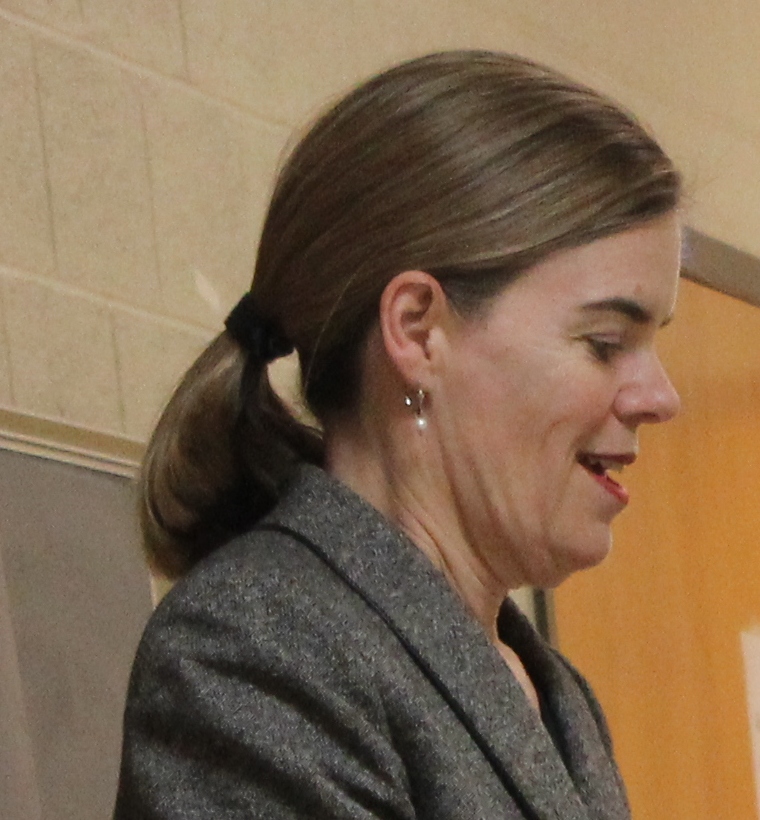
“In December 2015, the Board of Professional Responsibility recommended [PDF] that the Tennessee Supreme Court issue a public censure against Weirich. The Tennessee Board of Professional Responsibility also filed a supplemental petition for discipline based on the Brady violation and Weirich’s failure to exercise appropriate diligence in reviewing statements and making disclosures to the defense team. In March of this year, the Board dismissed the disciplinary petition and issued a private reprimand.”
While the proceedings have been covered well by local media, one less-explored aspect of filings recently made available further reveals the depths to which Ms. Weirich is willing to stoop to avoid accountability. She responded to the Board’s initial petition for discipline by filing a motion for summary judgment in the hopes of having the petition dismissed without a hearing. The basis for the motion? Ms. Weirich essentially claims that the Board’s allegations have no merit because the judges who have reviewed the underlying criminal case never reported her. That’s right. Because state judges evidently failed to comply with their own code of conduct, Weirich reasons that she should be let off the hook.





 Memphis Truth Commission